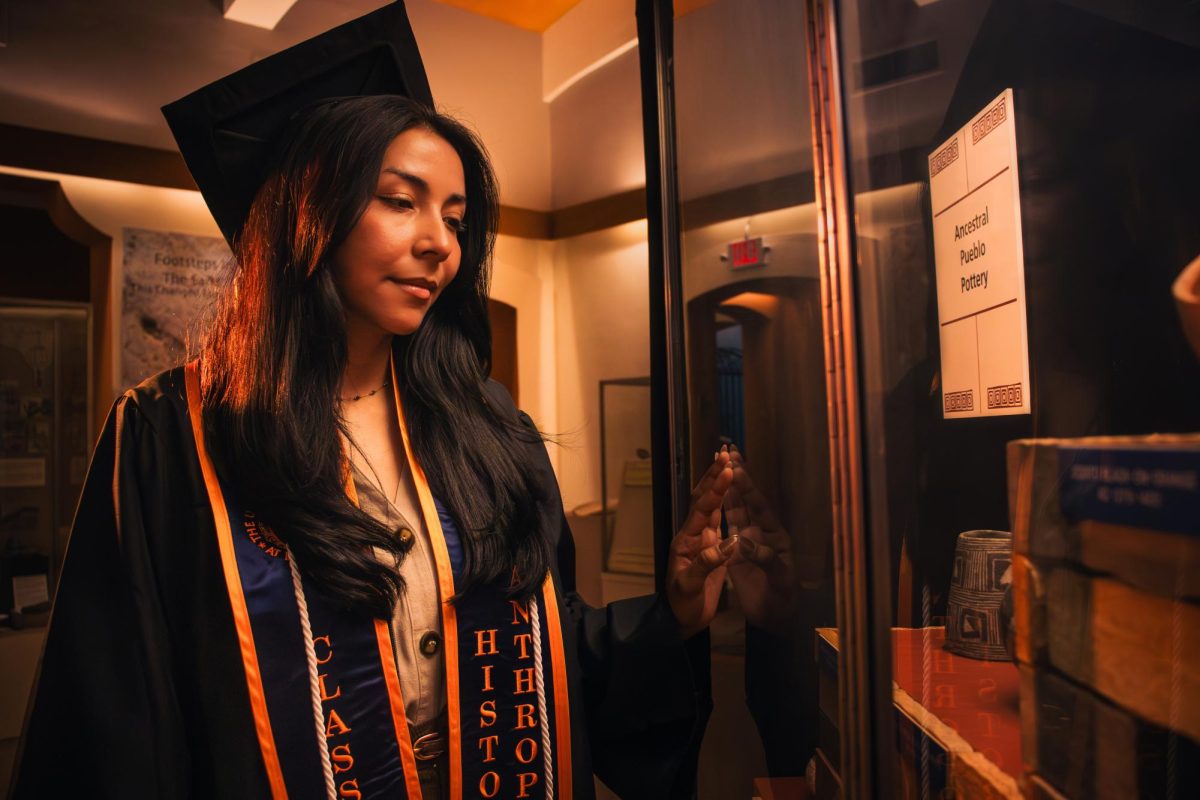

Heidi Baca, a University of Texas El Paso (UTEP) student, double majoring in anthropology and history, has been accepted into the Sansera Archaeological Institute field school in Spain, where she will conduct research after graduation.
In Spain, Baca will study bioarchaeology, the field of archaeology that focuses on understanding past human life through the analysis of bones and other biological remains. Even though Baca always had a passion for history, her path into archaeology was traced by resilience and life changing moments of her own.
“I never planned on doing academia. I thought it wasn’t in the cards for me,” Baca said.
Baca was working as a server at a restaurant when she and her best friend, Jackie Hager, were involved in a car accident that tragically took Jackie’s life. Jackie had always encouraged Baca to pursue a career as a professor, and after the accident, Baca committed to achieving that goal in honor of her friend.
“She told me that I should go to school for it [History] and tell the story of people that lived before me. I didn’t think that was possible for me because I wasn’t exactly a star student. I have dyslexia and dyscalculia,” Baca said. “But after she passed away, it took me some years to grieve and go through the trauma. I moved to California to get away, but while I was out there, I finally decided to go to school and do what she thought I could do.”
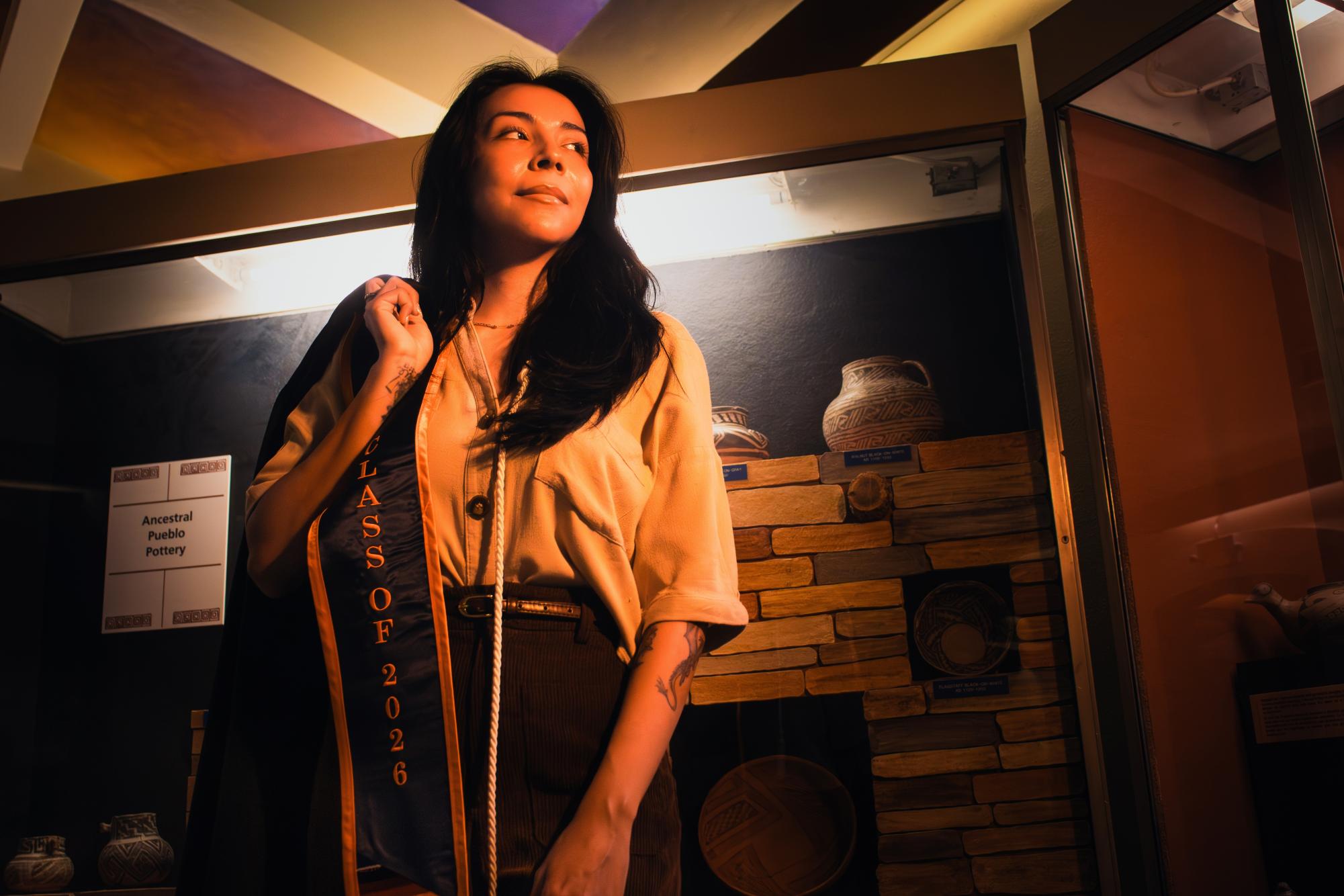
After graduating with honors from Diablo Valley College in Concord, California, Baca continued her academic journey at San Francisco State University (SFSU), where she enrolled in history and anthropology. Beyond her achievements and earning degrees, Baca found purpose in uncovering untold stories, it was her way of breathing life into the dead.
“We hear the stories of kings, queens, heroes and villains, but never about somebody’s mom, sister, brother or friend, and those were the stories I particularly really wanted to try and help preserve. So, I had to figure out a way to do that. That’s where bioarchaeology comes into play,” Baca said.
However, due to the COVID-19 pandemic, Baca was only able to complete one semester at SFSU. As she battled
long-term complications, including migraines and seizures, she made the decision to return to El Paso. Once she regained her health, she knew it was time to continue her academic journey.
“It took about two years for it [COVID-19] to finally go away. When it finally stopped, I decided to go back to school, but I couldn’t really go back to California anymore. So, I decided to apply to UTEP,” Baca said. “Originally, I had thought that it might be a bad idea, but it ended up being the best decision I ever made, because the school does so much for their students, especially the professors here.”
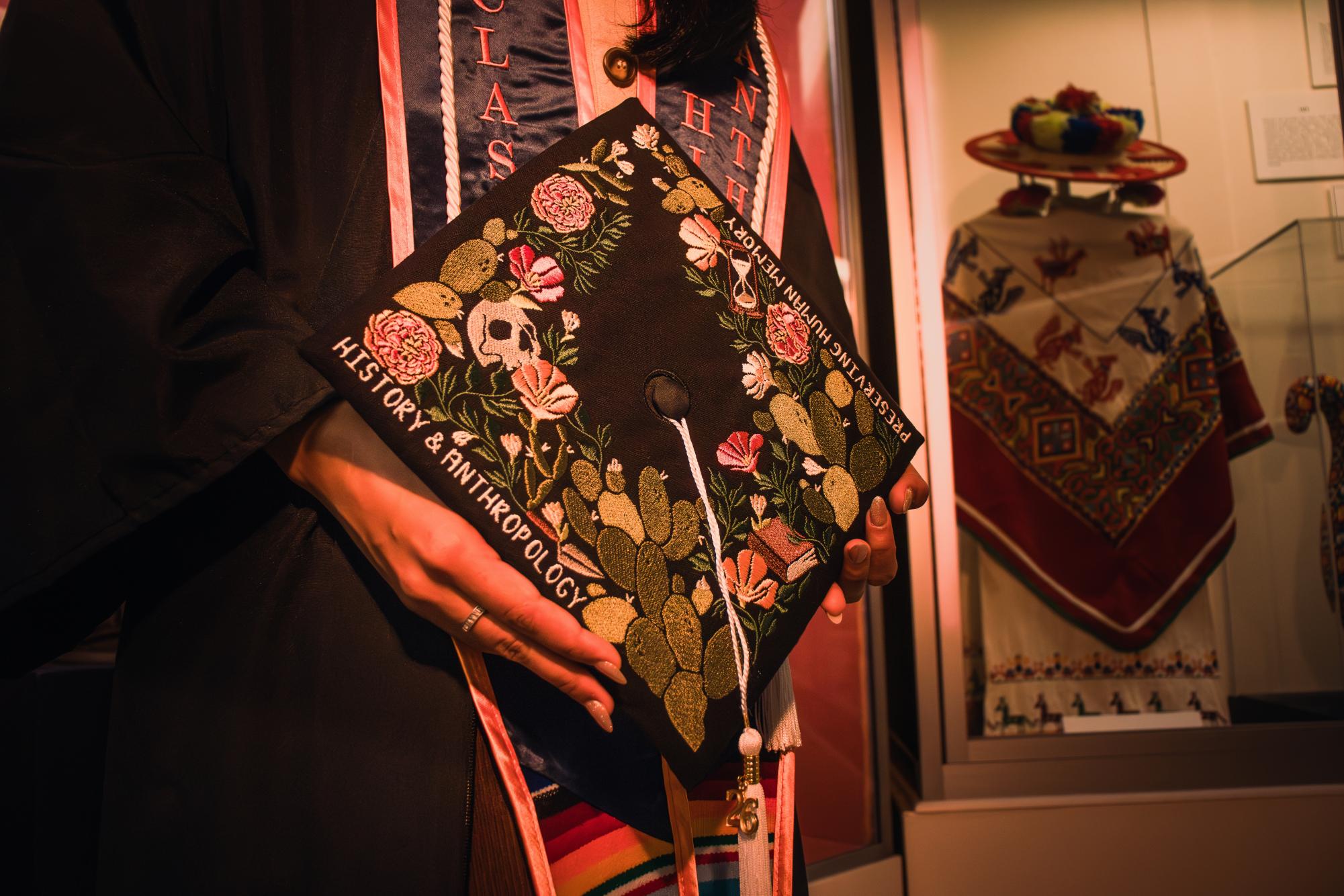
At UTEP, Baca was able to dive into classes of different branches of archeology and receive support from faculty members who guided her through their own experiences.
“I started going into archeology more, I took some classes with Dr. Carmichael and Dr. Gillion Wong, and I found out that I thrive in it. I really understand it. It’s something that comes, I wouldn’t say easily, because there’s a lot of studying that goes along with it, but I would say that because I’m so passionate about it, learning about it is fun, which makes it easier,” Baca said. “The more I started studying and doing that, the more I realized how bones can tell the story of a person, and when you learn how to read everything that’s on somebody’s bones, you can kind of breathe life back into somebody.”
For Baca, graduating with four degrees is not only an academic milestone, but a way of honoring her friends and all those who came before her. Whether she’s studying bones or creating art of her own and uploading it to her pottery account, or enjoying time with friends and family, she makes sure to pour life into everything.
Vivien Noe C. is a staff reporter at The Prospector and can be reached at [email protected]