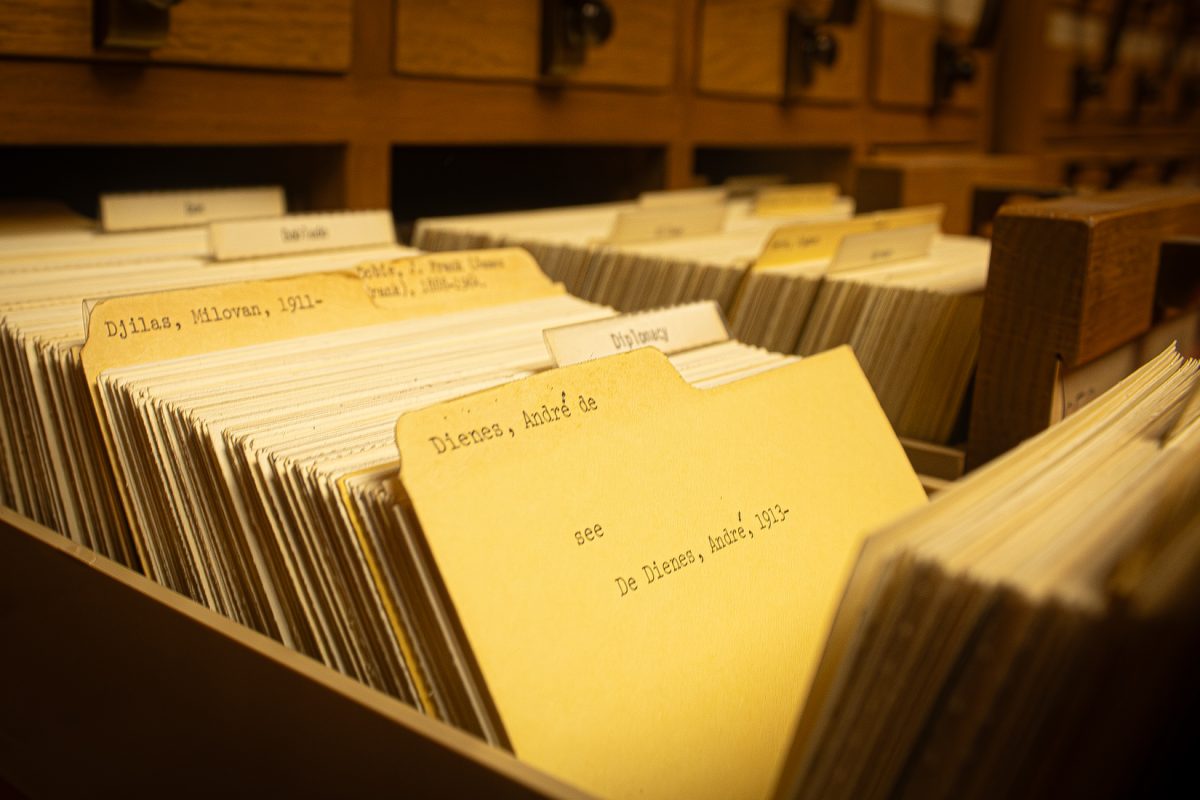

Tucked into the sixth floor of the University of Texas at El Paso’s (UTEP) Library is the C.L. Sonnichsen Special Collections Department, home to historical materials ranging from rare photographs and vinyl records to books documenting the Southwest and border region.
The C.L. Sonnichsen Special Collections department, led by Claudia Rivers, the head of Special Collections and Susannah Holliday, assistant head, works to preserve and provide access to hundreds of historically significant materials. Collecting items created in El Paso or by El Pasoans, the department holds local government and university records, politician‘s papers and specialized collections like the S. L. A. Marshall Military History Collection and Southwest and Border Studies Collection.
“We’re open for community users,” Holliday said. “My hope is that people realize that we exist to help them. I think a lot of the time people want to learn more about history, but there’s not a lot of places to do that and we’re here for the community and for students especially, we want them to come visit us.”
Holliday added that the department, alongside preserving history, also functions as a cultural space. Featuring exhibits celebrating UTEP’s 1966 NCAA championship, Women’s History Month and Dia de los Muertos.
Students, faculty and community members are welcome to explore these exhibits, use materials within the reading room and engage with the region’s history through original documents.
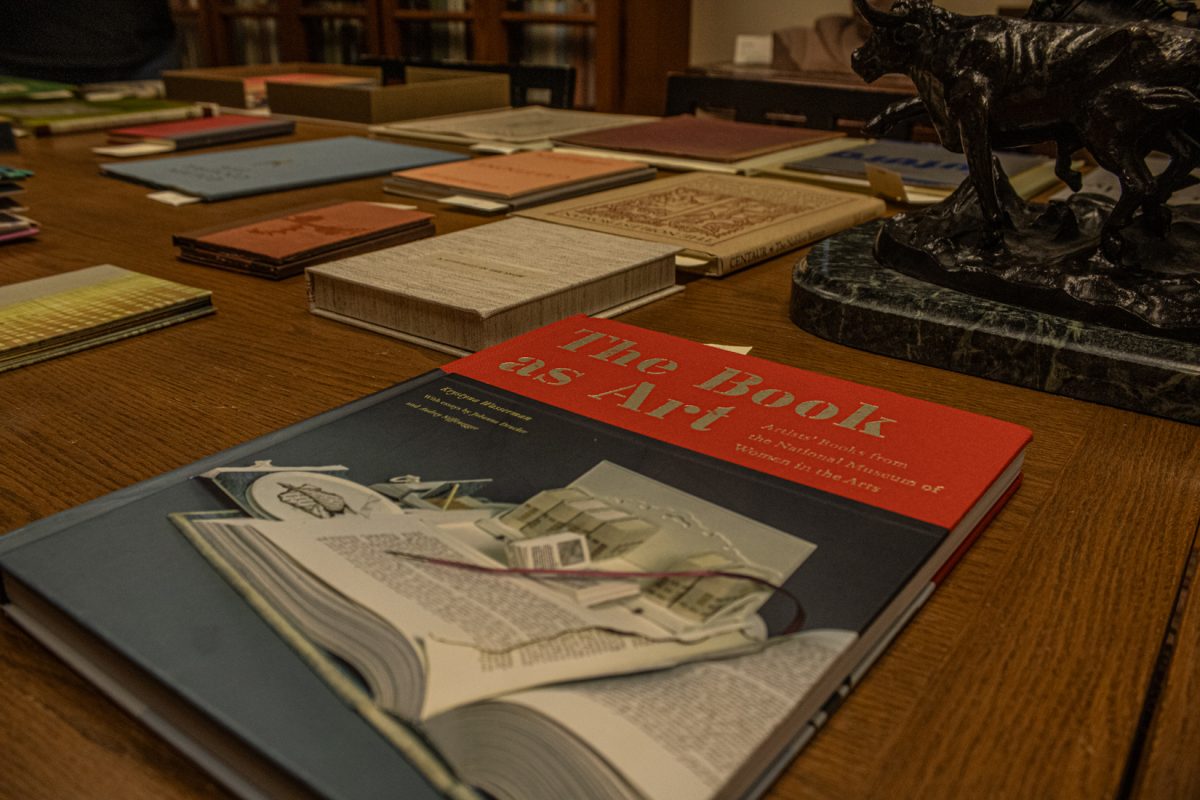
“Archives are a great place for cultural preservation. Every place in the U.S. is unique, right? But I think the border has a lot of misinformation about it, and don’t know anything about the border or about the southwest,” Holliday said. “I think it humanizes history.”
Among its remarkable holdings are permanent and rotating exhibits, rare books and artifacts. On the library’s fourth floor, visitors can view Jose Cisneros’s original illustrations for his book “Riders Across the Centuries: Horsemen of the Spanish Borderlands,” according to the special collections department website.
Even seemingly mundane items can hold unexpected value; Rivers explained that collections of grocery receipts from now abandoned towns or railroad crossing photos that might initially be considered boring, were later found to be crucial for researchers.
“We have a collection from Valentine of grocery store receipts. Because there’s not very much from Valentine, we also have a collection of photos of every level railroad crossing grade in El Paso,” Rivers said. “I went, this is the most boring collection. No one’s going to ever want to use this collection, but people have. You can’t keep everything, so you do have to appraise what you think its research value is, and it can be complicated to do that.”
While the special collections department considers what to preserve based on potential research value, their work continues beyond storing and digitizing old documents. For both Rivers and Holliday, the preservation of these historical materials is about keeping the region’s history alive and meaningful. Every photo, record or artifact ensures that future generations can study, reflect and learn from the past.
“The classic thing is that those who don’t learn from the mistakes of the past are doomed to repeat them. And that’s one of the things we’ve been seeing a lot lately. It’s good to see how thing’s change, but in a way, they still stay the same, and hopefully we can learn from these mistakes,” Rivers said.
By safeguarding these materials, the C.L. Sonnichsen Special Collections Department allows students, researchers and the public not just to view history but connect with it, understand it and carry its lessons forward.
Jewel Ocampo is a staff reporter and may be reached at [email protected]