Black excellence has long defined the University of Texas at El Paso (UTEP) Athletics, from record-breaking Olympians to modern student-athletes navigating leadership, identity and community on campus.
The legacy began long before UTEP carried its current name. As Texas Western College (TWC), the university helped reshape the national sports landscape, creating a foundation where Black athletes not only competed, but changed history. Today, that tradition continues through student-athletes who carry both opportunity and responsibility on their shoulders.
In 1966, TWC stunned the nation by winning the NCAA men’s basketball championship with the first all-Black starting lineup in a title game. The victory, later immortalized in the film “Glory Road” was more than a trophy: it was a cultural shift. At a time of deep segregation in college athletics, the Miners proved excellence could not be confined by prejudice.
Just two years later, the world witnessed another showstopping moment tied to the program.
At the 1968 Mexico City Olympics, former TWC track standout jumper Bob Beamon soared 29 feet, two and a half inches in the long jump, shattering the world record by nearly two feet. His leap, widely known as “the Leap of the Century,” stood as the world record for 23 years and remains one of the most iconic moments in Olympic history.
Beamon’s achievement cemented UTEP’s reputation as a global track and field powerhouse. The Miners would go on to win multiple NCAA championships in and cross country, producing Olympians and All-Americans from around the world.
But, excellence at UTEP is not only measured in medals.

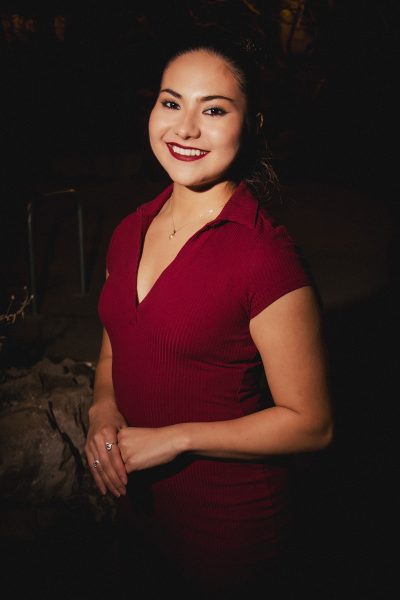
For women’s soccer forward Kialie Hudson, a rising senior and transfer student, Black excellence in sports carries a deeply personal meaning.
“When I think of Black excellence in the context of sports,” Hudson said, “I think of a hard-working athlete. I think sometimes there’s such a high bar you feel like you have to reach just to prove that you’re just as good.”
Hudson’s journey reflects both resilience and reflection. Originally from Houston, she transferred to UTEP after three years at Davidson College, seeking a better fit athletically and personally. She describes her experience at UTEP as community-centered: something she felt almost immediately upon her arrival.
“Your success, whether academically or in your sport, is very much community-based,” Hudson said. “People care here.”
Her perspective also includes navigating spaces where representation is limited. As a Black athlete competing in predominantly white soccer environments, she has felt the pressure to outperform simply to earn equal recognition.
“It can feel like you have to do the extra yard just to get recognized the same,” Hudson said. “And that can be frustrating.”
Despite those challenges, she approaches leadership with intention. Though she does not define leadership by a formal title, she believes it is built through relationships, trust and consistency.
“If someone can talk to you about the simple things,” Hudson said. “Then when times get rough, they have someone they can go to.”
Her perspective reflects the broader evolution of UTEP Athletics. Located along the U.S.-Mexico border, the university draws from a culturally rich and multicultural community, an environment Hudson said makes inclusion feel more natural.
“I’ve never felt excluded specifically because of my race here,” Hudson said. “It helps that UTEP is already such a diverse school.”
Still, Hudson said conversations about race and representation should not be dismissed.
“Maybe take a moment and think about the extra miles someone may have had to do to get to that spot,” Hudson said. “Sometimes it’s more of a mental battle than an out loud one.”
That mental resilience connects generations of Miner athletes. From Beamon’s gravity-defying leap to today’s student-athletes balancing sport, academics and identity, the trend is clear: excellence requires both performance and perseverance in all aspects.
Hudson, who is expected to graduate in Fall 2026, said she hopes to leave a legacy rooted in connection and compassion.
“I want to leave a legacy of loving your neighbors and helping others,” Hudson said. “You can be competitive and still care.”
From Texas Western’s groundbreaking championship to Olympic triumphs and current-day leadership, Black excellence at UTEP is not confined to a single moment. It continues to evolve across decades and disciplines.
The story of Black excellence at UTEP is still being written. Each season, each meet, each match adds another chapter. As new generations of Miners step onto the field, track or court, they do so standing on a legacy that proves excellence is not only achieved, it is sustained.
Melina Holguin is a contributor writer and may be reached at [email protected]