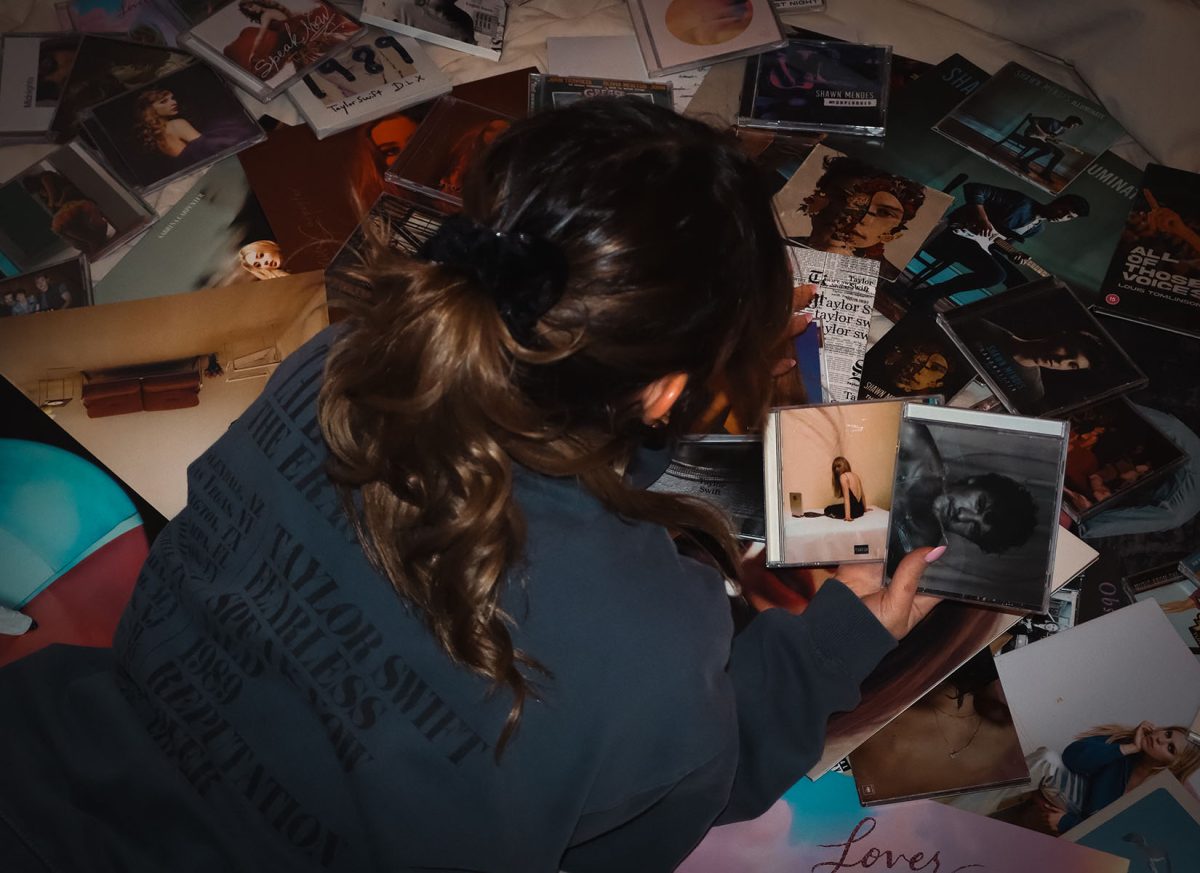

While it is generally justified for men to hurl insults and even fight at sports games, it is considered hysterical and immature for women to cry and scream during a concert. Male fans exist and are embraced, yet it’s only female fan enthusiasm that is heavily stigmatized.
The intense mocking of women who manifest their passion as fans highlights the double standard. Due to society’s attitudes towards them, some have chosen to abstain.
Convinced that she will be made fun of for it, UTEP junior student, Mia Arenas, prefers not to share her fanaticism with others.
“I’ve had friends in the past who have made me feel embarrassed because I’m a big fan of an artist that they don’t like or understand, so they find it easier to judge,” Arenas said.
She believes that it can be difficult to find a safe space where a girl can openly “stan” an artist and express excitement for their music.
“I’ve had older family members, like my grandma, refer to me as being crazy for liking someone who sings songs from a different genre — like reggaeton — than what she’s used to. Then I feel like I have to defend my artist choices to her,” Arenas said.
Fangirls are constantly subjected to rigid, negative social labels, and the music industry has only further entrenched the problem. The industry often does not take artists with a predominantly female fan base seriously because of the assumption that they are solely famous for their appearance rather than their talent.
When it comes to sports, men’s interests are rarely questioned, whereas women are expected to prove that they are real aficionados and not “posers.” Even when they do, it’s not enough to gain respect, according to Camila Azuara, a UTEP junior and soccer enthusiast.
“One thing I have experienced is being ‘quizzed’ about teams or players when I’m wearing a jersey, like I have to prove I actually understand the sport,” Azuara said. “This reflects a kind of misogyny in sports culture where male fans are assumed to be knowledgeable and passionate, while female fans are often reduced to only caring about appearances or treated like they don’t belong.”
Hypermasculinity is highly associated with athletics. A female professional player is therefore perceived as unfeminine, as is a female supporter who goes all out for her favorite team.
Over half of women and non-binary fans have experienced sexist behavior or language at soccer games, according to a 2024 survey by the anti-discrimination charity Kick It Out.
Many people can feel ashamed as a result of the pressures that come with deeply ingrained gender norms.
On social media, fangirls in general are continuously viewed as “cringy” and worthy of ridicule. Seldom is the word “dedicated” used to describe them.
“It’s very frustrating because women’s interests are often dismissed no matter what they are, which shows how female enthusiasm itself gets devalued,” Azuara said. “Male fans are labeled loyal and passionate, while female fans are criticized and trivialized, and that often discourages women from openly expressing what they love.”
Ethical standards are skewed concerning fanaticism, as tears of joy are categorized as dramatic or “too much,” while verbal and physical altercations are normalized.
The gender of the person being referred to determines whether the word “fan” carries a negative connotation or not.
Brisa Silva is a contributor and may be reached at [email protected]