Editor’s Note: This is the second part of a three-part series covering the health and lifestyle of athletes.
The term “no days off” isn’t just a saying—it’s a lifestyle for athletes striving to be the best at their craft.
At The University of Texas at El Paso (UTEP), this dedication is evident across sports, from the softball diamond to the track and field circle.
Success begins with organization and academics, putting the “student” in student athlete, balancing training, academics and recovery routines to meet the demands of their teams.
Softball senior utility player Brianna Garcia exemplifies this effort. Off the field, she earned a spot on the Conference USA Commissioner’s Academic Roll in both 2024 and 2025 while pursuing a degree in kinesiology.
A key part of her success is a simple but often overlooked routine: Garcia uses a detailed planner to track all her activities, allowing her to structure her schedule so her academic grades never fall behind.
“Having a planner is such a lifesaver. Organization is key; managing everything becomes much easier when you’re prepared,” Garcia said.

While athletes like Garcia rely on personal strategies to stay organized, UTEP also provides institutional support. The Miner Athletic Club (MAC) offers resources to help student-athletes balance the demands of academics and athletics.
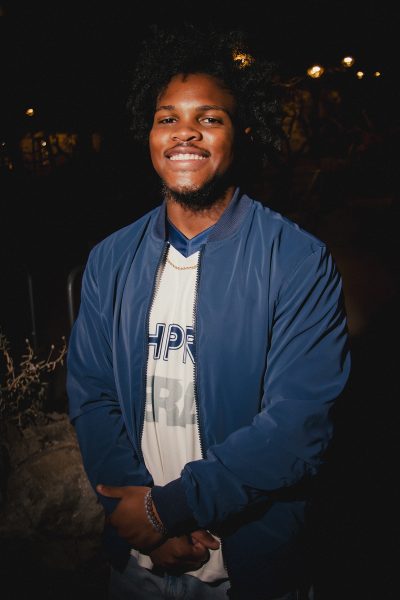
Sophomore track and field thrower Xavier Westmoreland describes how the system has been beneficial to him.
“Our professors here at UTEP are very helpful. We can schedule tutoring appointments, stay on top of our grades, and they’re very understanding of our athletic schedules,” Westmoreland said.
Even from a staff perspective, Chris Campbell, director of strength and conditioning, emphasized academic balance.
“We work around class schedules to make sure academics are the forefront of what athletes are doing. That is what they came here for,” Campbell said. “At this level, discipline off the field translates to performance on it.”
Once their academic responsibilities are in check, focus shifts to the physical grind that defines the offseason.

During the offseason, athletes focus on building strength and endurance, fueling their bodies properly to support growth, recovery and peak performance. Both Westmoreland and Garcia noted feeling “stronger in the offseason than during the season.”
Campbell explained that training concepts change year-round.
“Offseason is the time to get bigger, stronger [and] faster,” Campbell said. “In-season isn’t about maintenance. We are always striving to improve, but we don’t hit as much volume. It’s about staying healthy and on the field or the court.”
Athletes balance technique, strength and explosiveness with recovery practices such as stretching, foam rolling and getting proper rest—tailoring routines to their individual goals.
Westmoreland takes advantage of active recovery methods in the Larry K. Durham Training Room, while Garcia supplements her routine with additional equipment at Restore El Paso, which is available through the UTEP Athletics partnership.
Each athlete’s day may look different, but the backbone for long-term success lies within the player themself.
“It is consistency with training habits, recovery, sleep and nutrition,” Campbell said. “It is easy to do it for a week, but those who do it throughout the offseason are the ones who take the next step.”
Striving for greatness demands consistent effort and focus. The pursuit of that standard often pushes athletes to their mental limits and at times, beyond it.
Garcia shared that building strong mental resilience is an important factor to managing the psychological battles that come with high-level competition.
UTEP also supports athletes’ mental health such as providing access to professionals, journaling techniques and team activities.
“[The UTEP mental health support] has helped a lot. People are in a vulnerable state, and we are all doing it together, so we definitely grow closer and improve,” Garcia said.
Westmoreland echoed the significance of mental focus during intense individual training cycles, as he recalls a saying from his coach.

“Some days are good, some okay, some horrible. You just have to keep that mindset and know it will get better,” Westmoreland said.
Despite the challenges, motivation remains at the core of every routine. Garcia channels her competitive spirit and reminds herself why she started playing.
“I just remind myself why I started playing in the first place…my family, my love for the game,” Garcia said. “Remembering your ‘why’ keeps you grounded when things get tough.”
The offseason is more than downtime; it’s a structured period of growth, recovery and preparation, where strength, nutrition and mental resilience all integrate to ensure all athletes are competition ready.
During this time, athletes follow routines knowing that every early morning, recovery sessions and carefully prepared meal build toward their readiness when the bright lights turn on.
For UTEP athletes, success isn’t built in the spotlight, but “behind closed doors” when no one is watching, never taking a day off.
Cameron Mason is a staff reporter for The Prospector and can be reached at [email protected]